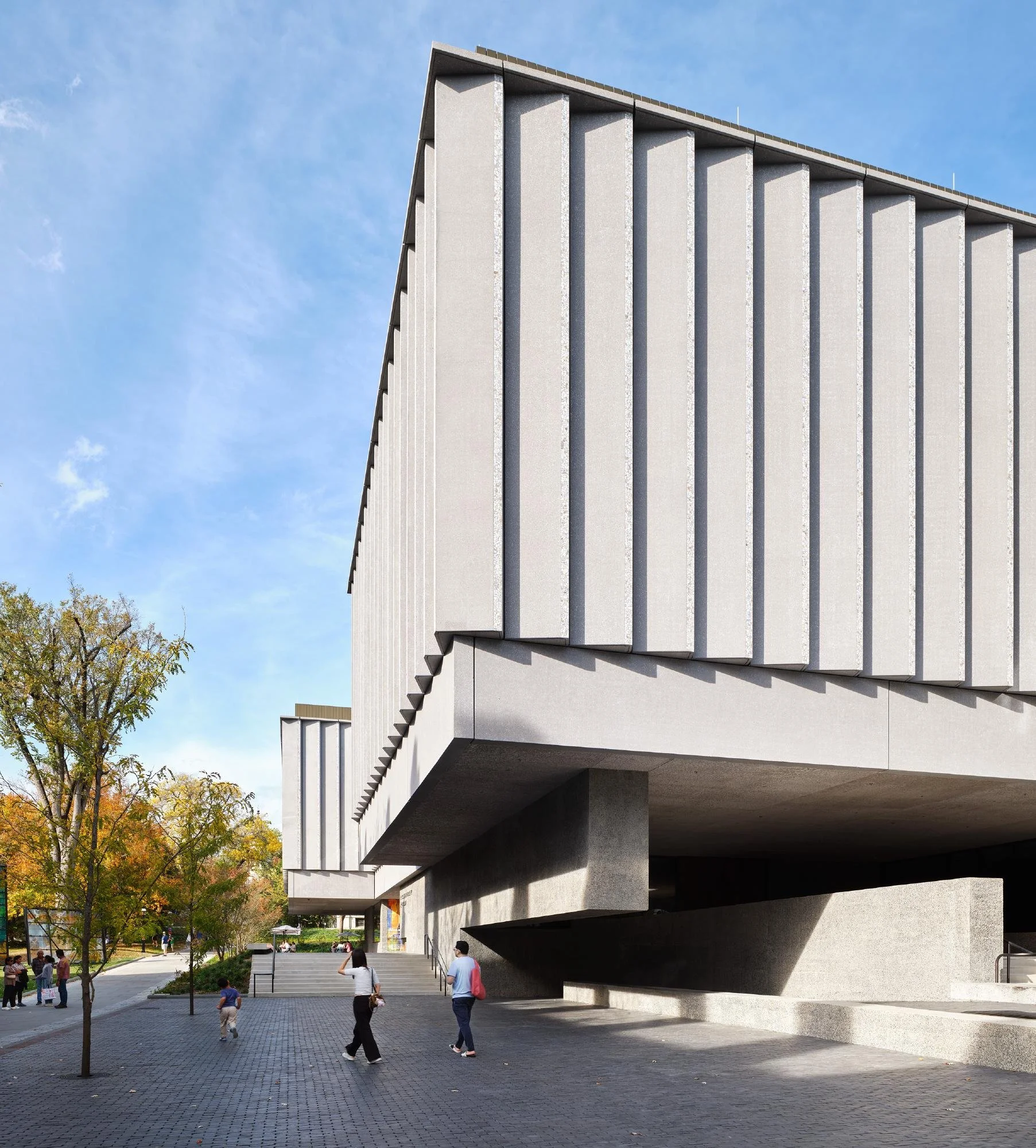
Cantilevered massing creates public spaces underneath, serving as outdoor entrance lobbies. Photo: Dror Baldinger, Richard Barnes, Princeton University Art Museum
It’s a quintessential New England town. The bench in the little green square centered in the cluster of colonial buildings beckons for a seat. Coffee shops, restaurants, bars, shopping, public library, all within a stone’s throw from each other. Young children running and dashing between elders shuffling down the sidewalk. College students popping into the neighborhood bar. What a time to be alive. It doesn’t hurt that its peak fall foliage. Orange and red leaves framing the blue sky, awaiting the gust of wind to push them to the ground and become crunchies.
Just across the street is a college campus. Anchored by a colonial hall and an ensemble of collegiate gothic buildings, the campus expands south, incorporating an eclectic style of architecture. It’s a prime example of how a college campus is a condensed version of a city. The mix of residential (dorms), commercial (classrooms and research offices), recreational (fitness centers), hospitality (dining halls), and medical (health centers) all hum along to the beat of the students walking through the quad. Midway through the campus, the Princeton University Arts Museum is the latest attraction. A contemporary brutalist building, it beckons for a visit.
It’s a stunning building. The parti of the building is complicated, just like the architect. The building was already well underway when sexual harassment allegations against David Adjaye came to light. Princeton did its best to distance itself from the design architect, and the common passerby would never know. But, it’s a sensitive subject to approach, and it’s perhaps fitting for a college campus to be the setting for the age old question: does the ends justify the means.
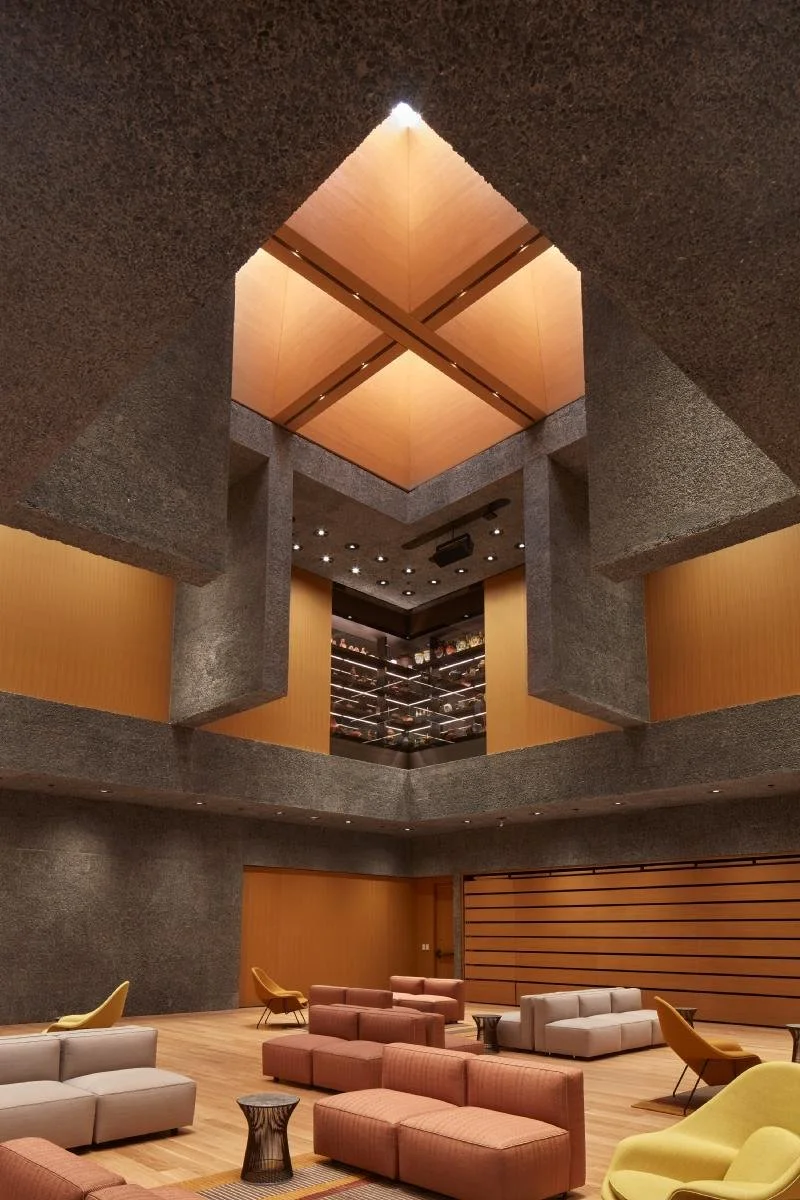
Dynamic spaces visually connect the first and second floor, including the glass display cases. Photo: Dror Baldinger, Richard Barnes, Princeton University Art Museum
What I will say is that the building works. The approach under the cantilevered second floor gallery spaces allows for a sense of place before even entering the building. The unique palette of textured concrete, heavy timber, and brass grounds the building and serves as a neutral background for the art inside. Multiple double height spaces yield a connection between the floors, and the courtyard spaces bring natural light to the first floor lobby spaces. I quite like the moment where the glass background material for a second floor display shelf actually overlooks the lecture hall below. It’s almost as if the people down there are part of the exhibit.
The museum is situated really nicely within the context of the rest of the campus, which does not disappoint. The seemingly endless list of renowned architects and firms feels like more of a team effort and less of an individual competition. I can only imagine the inspiration that I would get as an architecture student on the campus. I guess that’s the benefit of being an Ivy League school with a ‘robust’ endowment. But it’s less pretentious than that. From the free on campus parking to the entrance gates that are always open (not to mention the liberal approach to learning), the campus and town are very welcoming. It’s a recipe for success. Just look at the new museum.